Partnership Background
The Municipality of Kipawa and Ville de Témiscaming are located on the Traditional Territory of Keboawek First Nation in western Quebec, near the Ontario border. These three neighboring communities are located within 15 kilometers of one another, approximately 400km northwest of Ottawa.
These three communities participated in CEDI Phase I from 2013-2016.
Key Milestones and Collaborative Community Economic Development Initiatives
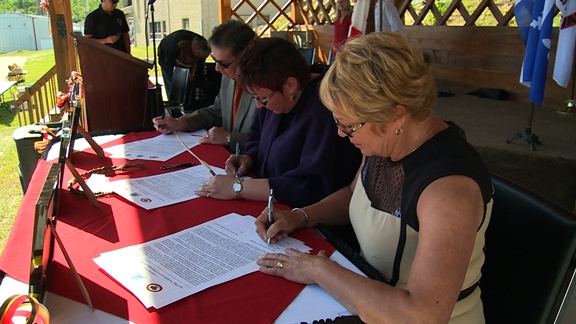
In June of 2014, on National Indigenous Peoples Day, Eagle Village First Nation, Municipality of Témiscaming, and Municipality of Kipawa signed a Relationship Accord in Keboawek First Nation to formalize their commitment to working together in a spirit of cooperation, mutual respect, and shared purpose. Recognizing their shared borders and common interests, the Accord provides a framework for joint planning and collaboration in areas such as recreation, tourism, business, health, and public safety. It reflects a desire to close social, spiritual, and economic gaps while honouring the distinct histories and governance structures of each community. The Accord emphasizes the importance of open communication, regular joint meetings, and mutual investment in youth as a foundation for long-term prosperity. With clear goals, milestones, and inclusive engagement, the agreement aims to create culturally respectful, economically vibrant communities where all residents feel welcome, safe, and empowered. Designed as a living document, the Accord also welcomes future participation from neighbouring communities and sets the stage for continued regional collaboration.
Joint Regional Tourism Strategy and Marketing Plan
Keboawek First Nation, Ville de Témiscaming, and Municipality of Kipawa developed a Joint Regional Tourism Strategy to prepare for the opening of Opemican National Park. The strategy outlined a shared vision for tourism growth and was followed by the creation of a Joint Tourism Marketing Plan. A joint procurement committee was formed to ensure local businesses from all three communities were engaged in park-related opportunities. The initiative was identified and prioritized during early CEDI workshops. A Volunteer Peer Mentor from the FCM network supported the three EDOs in building stronger collaboration and advancing the strategic planning process.
The partnership organized two study tours in 2014, one to Algonquin Park and Huntsville and another to Temiscouata and Wendake, to learn from successful tourism models. The study tours were supported with additional funding and assistance in planning from a regional tourism body. Following the study tours, the partnership did a joint community consultation where 80 people shared a meal and contributed to the joint tourism strategy. In addition, the partnership hired a consultant to improve their joint planning process with the use of the CEDI Capacity Building Grant. These experiences helped shape the regional approach and build momentum. The strategy was finalized and presented to all three councils in February 2016. With $36 million announced by the Province of Quebec for Opemican Park’s development, the partnership continued to meet regularly and actively implemented the plan with a long-term vision for regional tourism. Throughout their time in CEDI, the communities completed a joint branding exercise and produced shared marketing tools, including a regional website, promotional video, and community calendar.
In the Media
Photo Gallery